
Motorsport & Classic Speed Gauges
Motorsport & Classic Speed Gauges
A shortened final drive or new wheel setup means your factory speedometer is lying to you. Don't risk liaison penalties or missed braking points. Browse our stock of STACK, VDO, and SMITHS gauges below, filter by diameter, and get a rock-solid speed reading for your next event.
Promo
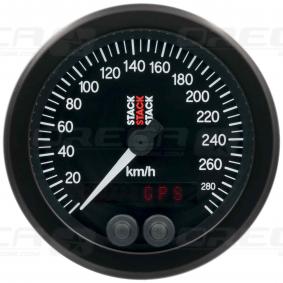
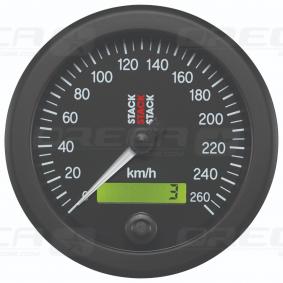
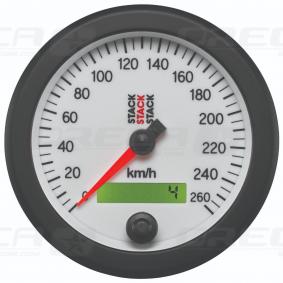
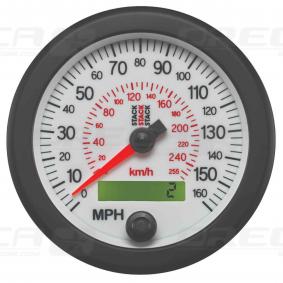
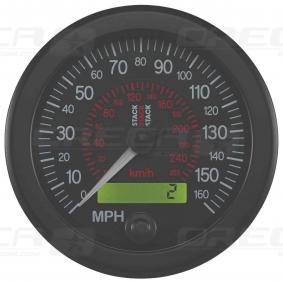
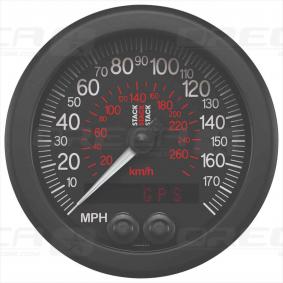
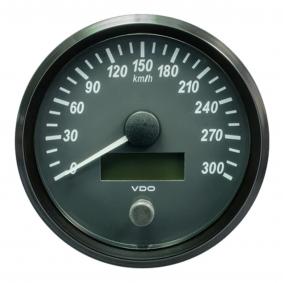
Speedometers and Speed Gauges for Rally, Track and Classic Cockpit Accuracy
A speed gauge is not a decorative dial. It defines how precisely you manage braking points, liaison timing and mechanical sympathy. If your drivetrain setup changes and the signal is no longer calibrated, then your displayed speed becomes misleading, and your driving decisions follow that error.
In rally conditions, this becomes critical. You shorten your final drive or change tyre diameter, and suddenly your original gauge is off by 15–20 km/h. If the reading is wrong, then your average speed on road sections becomes inconsistent, and penalties accumulate quickly. The solution is simple: choose a unit with fast recalibration capability and stable signal processing.
- Rally drivers: need recalibration after gearbox or differential changes.
- Track drivers: require instant readout with no latency at high speed.
- Classic car owners: want period styling with modern signal stability.
- Brands like STACK, VDO and SMITHS cover these use cases precisely.
If signal acquisition is inconsistent, then the needle oscillates. If damping is poorly engineered, then vibration from the drivetrain transfers directly into the display. In both cases, the driver loses trust in the instrument — and once that happens, the gauge has no operational value.
STACK vs VDO vs SMITHS: Selecting the Right Speed Gauge Architecture
STACK is engineered for motorsport environments where zero lag and instant readability matter. On track, if your speed trace lags behind reality, then braking inputs are delayed. STACK systems often integrate with digital dashboards or include shift-light logic, allowing immediate driver feedback under load.
SMITHS targets classic dashboards. The requirement is different: maintain a chrome-bezel vintage look, but eliminate the instability of old cable-driven systems. By pairing traditional aesthetics with electronic or GPS signal input, the needle becomes stable even at sustained speed, removing the typical oscillation seen above 80–100 km/h.
VDO sits between both worlds. It offers robust, adaptable solutions for restomod builds, trackday cars and mixed-use vehicles. If you need reliability across varying conditions without complex integration, VDO provides a balanced architecture.
| Brand | Look | Signal | Ideal for |
|---|---|---|---|
| STACK | Modern race display | Electronic / CAN / Sensor | Track cars, race builds, high-speed precision driving |
| VDO | OEM / performance hybrid | Electronic / inductive | Sports cars, restomod projects, dual-use vehicles |
| SMITHS | Classic chrome bezel | Mechanical / electronic / GPS | Classic cars requiring vintage look with modern accuracy |
Why Signal Stability and Calibration Define Real Driving Performance
On track, if your display lags by even a fraction of a second, then your braking reference shifts forward. This increases thermal load on the braking system and disrupts corner entry balance. A fast-response speed gauge removes that delay and stabilizes your inputs.
In classic applications, the issue is different. Mechanical cable systems introduce oscillation due to torsional vibration. If that vibration is not filtered, then the needle “hunts” across the dial. By switching to electronic or GPS-based systems, the signal becomes smooth and readable, even under drivetrain load.
- Eliminate speed reading errors after drivetrain modifications
- Stabilize cockpit data under vibration and heat
- Improve consistency in braking and pacing decisions
- Secure reliable instrumentation for both road and competition use
Real stock availability, fast shipping and motorsport-proven brands ensure your dashboard setup is ready without delay. Prepare your car with instrumentation you can trust under load.
You have shortened your final drive or changed wheel size? Do not drive blind. Filter above by diameter (52mm, 80mm…) and signal type to find your speed gauge available in stock.
How do I fix an inaccurate speedometer after changing gear ratio?
You need a recalibratable speed gauge. If the final drive ratio or tyre size changes, then the original signal becomes incorrect. Modern electronic or GPS units allow fast recalibration to restore accurate speed readings.
Why does my classic car speedometer needle shake?
Mechanical cable systems transmit drivetrain vibration directly to the gauge. If damping is insufficient, the needle oscillates. Switching to an electronic or GPS signal stabilizes the reading.
What is the advantage of a digital or motorsport speed display?
Digital or motorsport displays provide near-instant response. If there is no latency, then braking points and speed references become more precise, especially in high-speed track conditions.
Is GPS speed measurement reliable for motorsport?
GPS systems are highly stable and eliminate mechanical vibration issues. However, signal refresh rate must be sufficient. If refresh is too slow, then response delay can appear in aggressive driving situations.
Which speed gauge size should I choose?
Choose based on dashboard layout and visibility. Common sizes like 52mm or 80mm must fit your cockpit geometry. If the gauge is poorly positioned, then readability under driving conditions is reduced.
